.svg)
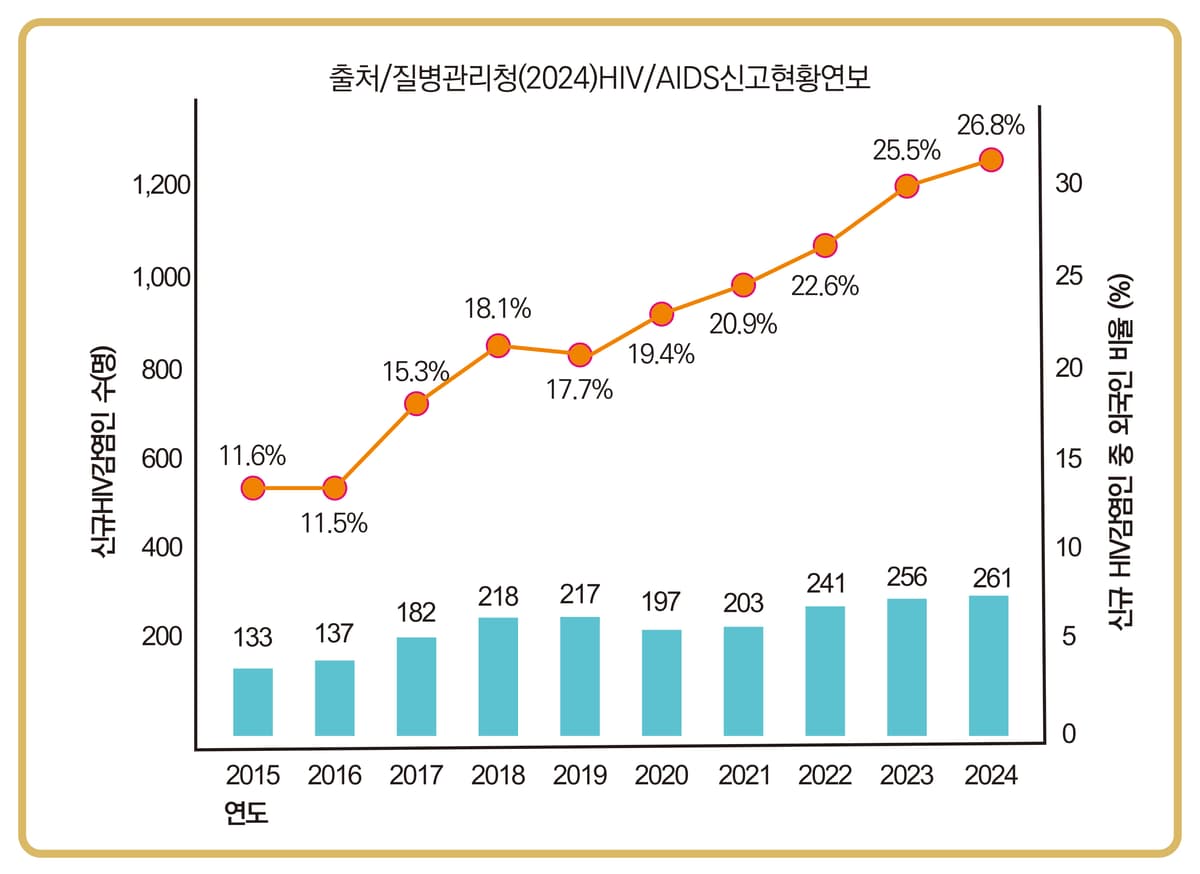
While the number of new HIV infections in Korea is generally decreasing, the number among foreigners is actually increasing, requiring special caution from foreigners residing in the country.
According to the 2024 HIV/AIDS reporting status announced by the Korea Disease Control and Prevention Agency, a total of 975 new HIV infections were reported last year, a slight decrease from the previous year. However, among them, 261 (26.8%) were foreigners, which is an increase from 256 the previous year.
■ Proportion of female foreigner infections particularly high
A notable point is the gender distribution. While the majority of new infections overall are males (88.7%), among the 110 female infections, 79 (71.8%) were confirmed to be foreigners. This suggests that women in foreign communities may be more vulnerable to HIV infection risks.
■ 99% of infection routes are 'sexual contact'… Prevention is key
Analysis of domestic cases that responded to epidemiological investigations showed that 99.8% of infection routes were due to sexual contact. Experts emphasize that, regardless of nationality, unsafe sexual contact is the main cause of infection, making adherence to prevention measures such as condom use most important.
■ 'Test even without symptoms'… Anonymous testing guaranteed
HIV often has no specific symptoms in the early stages of infection, posing a high risk of unknowingly transmitting it to others. Fortunately, with recent advances in medical technology, early detection and consistent treatment can nearly eliminate transmissibility, allowing for a healthy daily life.
A representative from the Foreigner Support Center stated, 'Many foreigners hesitate to get tested due to language barriers or fears of identity exposure,' and urged, 'Public health centers nationwide offer free testing regardless of nationality or residency status, and anonymously if desired, so please participate actively.'